Time as Cycle
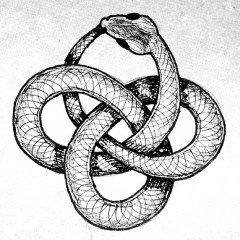 William Quirk argues "The Sunset Limited reveals that it operates in terms of a cyclical conception of time, not the conventional understanding of linear time, the 'clock time' that is an infinite succession of new moments (13)." Quirk imagines there are multiple versions of Black and White's conversation apart from the one version we read, each version following the previous one in time, as in a cycle, echoing moments from the past.
Erratic Time
White's level of interest in the conversation varies. At times he is almost ready to walk out the door and, at other times, he seems to get lost in conversation, forgetting himself and his hang ups. Time varies as one's interest level rises and falls. So time's rate, at least for the characters in The Sunset Limited, and probably for the audience too, is not constant. It accelerates and decelerates.
I wanted to see if there was some concept of a specifically theatrical time, kind of in the way that I've heard people talk about narrative time as opposed to real time. There is the time it takes for the events to be described, and this is often (almost always) different than the time it takes for these events to be communicated through narrative. In terms of theatrical time, I found this article.
From the article, I got the impression playwrights have experimented with the presentation of time in a lot of different ways. There are "miracle plays," which cover the whole history of the universe. This is in contrast to "the handling of time in Japanese Noh theatre, in which real time, with its inevitable passage is retarded to create a sensation of timelessness."

No comments:
Post a Comment