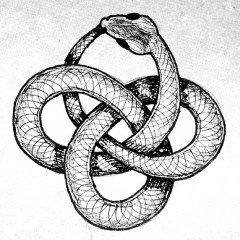
Many elements of games can be found in The Sunset Limited.
Their names. Black and White. They sound like they should be playing chess, Go, or some other classic board game. It also seems fitting that they should be seated at a table for most of the story.
The dozens. Black talks about "the dozens," a game where players insult each other. To take an insult personally is to lose the game.
Commentary on the game. Both make statements about what they're doing, betraying a mutual awareness that, at some level, each is trying to pull something over on the other. Either that, or each is just humoring the other, which, in the end, would actually be another way of trying to pull something over on the other. Some of their commentary:
"I've got to strategize,"
"the trick bag,"
"You got me on unfamiliar ground,"
"You tough, Professor. You tough."
Their coyness. It's as if they're playing cards sometimes. Neither wants to tip his hand. Black doesn't want to reveal too much about his prison life. When Black brings up Christianity at one point, White asks, "How do you know I'm not Jewish?" When Black brings up White's father, White asks "Who said he was dead?"
What they do say about themselves. On the other hand, while some of what they say seems to be said in order to keep from being pinned down, from being known by the other, some of what they say is the opposite. Some of what they say is about presenting images of themselves to each other, about making themselves known in a certain way. Black calls himself---somewhat facetiously, I think---"just a dumb, country nigger." White calls himself "different" than other people. Black and White play roles, in other words. They represent versions of themselves, which is what game play is often about.
For all the ways in which The Sunset Limited looks like a game, it's kind of hard to tell how to interpret the basic narrative of that game. If it's a game, then who wins? There seems to be many different interpretations, and there doesn't seem to be one that is decidedly better than the others.
White Wins, Black Loses. White puts up with Black for a long time, but can't do it forever. When he gets impassioned toward the end, he manages to shut down Black, who is reduced to a desperate plea out to God.
Black Wins, White Forfeits. Black kind of mentioned this when he talked about the dozens. To leave the game area is to in effect resign. Neither Black nor White had been beaten when White left. There was more game play to be had, but White cut it short.
Neither Party Wins; The Game Ends. The goal of the game is only to keep playing it. In that sense neither Black nor White win. I thought of this interpretation when researching Gadamer for my third essay, who gives this interpretation of game play in general.
Thursday, May 2, 2013
Time in the Sunset Limited
Time as Cycle
William Quirk argues "The Sunset Limited reveals that it operates in terms of a cyclical conception of time, not the conventional understanding of linear time, the 'clock time' that is an infinite succession of new moments (13)." Quirk imagines there are multiple versions of Black and White's conversation apart from the one version we read, each version following the previous one in time, as in a cycle, echoing moments from the past.
Erratic Time
White's level of interest in the conversation varies. At times he is almost ready to walk out the door and, at other times, he seems to get lost in conversation, forgetting himself and his hang ups. Time varies as one's interest level rises and falls. So time's rate, at least for the characters in The Sunset Limited, and probably for the audience too, is not constant. It accelerates and decelerates.
I wanted to see if there was some concept of a specifically theatrical time, kind of in the way that I've heard people talk about narrative time as opposed to real time. There is the time it takes for the events to be described, and this is often (almost always) different than the time it takes for these events to be communicated through narrative. In terms of theatrical time, I found this article.
From the article, I got the impression playwrights have experimented with the presentation of time in a lot of different ways. There are "miracle plays," which cover the whole history of the universe. This is in contrast to "the handling of time in Japanese Noh theatre, in which real time, with its inevitable passage is retarded to create a sensation of timelessness."
Friday, March 29, 2013
Repetition, chaos
The Charge of the Light Brigade
Alfred, Lord Tennyson
Half
a league half a league,
Half a league onward,
All in the valley of Death
Rode the six hundred:
'Forward, the Light Brigade!
Charge for the guns' he said:
Into the valley of Death
Rode the six hundred.
'Forward, the Light Brigade!'
Was there a man dismay'd ?
Not tho' the soldier knew
Some one had blunder'd:
Theirs not to make reply,
Theirs not to reason why,
Theirs but to do & die,
Into the valley of Death
Rode the six hundred.
Cannon to right of them,
Cannon to left of them,
Cannon in front of them
Volley'd & thunder'd;
Storm'd at with shot and shell,
Boldly they rode and well,
Into the jaws of Death,
Into the mouth of Hell
Rode the six hundred.
Flash'd all their sabres bare,
Flash'd as they turn'd in air
Sabring the gunners there,
Charging an army while
All the world wonder'd:
Plunged in the battery-smoke
Right thro' the line they broke;
Cossack & Russian
Reel'd from the sabre-stroke,
Shatter'd & sunder'd.
Then they rode back, but not
Not the six hundred.
Cannon to right of them,
Cannon to left of them,
Cannon behind them
Volley'd and thunder'd;
Storm'd at with shot and shell,
While horse & hero fell,
They that had fought so well
Came thro' the jaws of Death,
Back from the mouth of Hell,
All that was left of them,
Left of six hundred.
When can their glory fade?
O the wild charge they made!
All the world wonder'd.
Honour the charge they made!
Honour the Light Brigade,
Noble six hundred!
There are different ways to use repetition as a poetic tool. The repetition in "The Charge of the Light Brigade" doesn't fit any structure I recognize. I mean it doesn't follow, for instance, the verse-chorus form of Western music. I think that the poet might have wanted to capture a feeling of war. War, from the perspective of a soldier, is probably repetitive but unpredictable. A soldier, having no agency of his own, is at the mercy of circumstance, that is, cannon fire, the orders of officers, etc. These things are an expected part of war. You can anticipate that they will occur (and occur again), but you can't anticipate when they will occur. Thus the placement of repeating lines throughout the poem likewise appears haphazard and random.
Every line starts with a capital letter, which indicates to me the force with which these words would be spoken. The speaker seems to be some abstracted war proponent, singing the virtues of soldiers who died in battle. Of course, there seems to be some intent of irony behind this poem. Despite the speaker's passionate rhetoric, the main impression the reader gets is of absurdity, as in this passage: "'Forward, the Light Brigade!' / Was there a man dismay'd ? / Not tho' the soldier knew / Some one had blunder'd: / Theirs not to make reply, / Theirs not to reason why, / Theirs but to do & die,".
After a Death
After a Death
Roo Borson
Roo Borson
Seeing that there’s no other way,
I turn his absence into a chair.
I can sit in it,
gaze out through the window.
I can do what I do best
and then go out into the world.
And I can return then with my useless love,
to rest,
because the chair is there.
I turn his absence into a chair.
I can sit in it,
gaze out through the window.
I can do what I do best
and then go out into the world.
And I can return then with my useless love,
to rest,
because the chair is there.
This poem struck me because of its simplicity.
First, to speculate:
The poem is about emptiness. The speaker captures a moment of emptiness while resisting the urge to turn it into something else, to dress it up in some fashion, really, to interpret it. She doesn't look for a source of hope, or a reason, or someone to blame in response to her loved one's absence. Instead she simply regards her own feeling of love, which has no object because the person she loves is gone.
It's hard to get a handle on death. You want to address it. You want to make sense of it. Maybe the speaker is saying that in terms of dealing with absence, all responses are equal because you're not going to understand it anyway. You can't approach it. Absence is like the concept of nothing. It's too abstract. It doesn't stand up to examination. What you can do is look at something concrete, like a chair---and that feels so unsatisfactory as a response. But I think the speaker is getting at something when she sustains that response for the length of the poem. There is a weird kind of power in that.
In terms of structure, there are a lot of line breaks, commas, and periods, which create silences. The sentences themselves are declarative and direct and so add to the impact of the silences. The repetition of the phrase, "I can" highlights the speaker's feeling of uselessness; when she gets to the last one, you feel that she's exhausted her entire list of "I can"s, like she's run out of options to enumerate.
Wednesday, March 20, 2013
Coltrane
Dear John, Dear Coltrane
Sex fingers toes
in the marketplace
near your father's church
in Hamlet, North Carolina-
witness to this love
in this calm fallow
of these minds, there is no substitute for pain:
genitals gone or going
seed burned out
you tuck the roots in the earth,
turn back, and move
by the river through the swamps,
singing a love supreme, a love supreme;
what does it all mean?
Loss, so great each black
woman expects your failure
in mute change, the seed gone.
You plod up into the electric city-
your song now crystal and
the blues. You pick up the horn
with some will and blow
into the freezing night:
a love supreme, a love supreme-
Dawn comes and you cook
up the thick sin 'tween
impotence and death, fuel
the tenor sax cannibal
heart, genital and sweat
that makes you clean-
a love supreme, a love supreme-
Why you so black?
cause I am
Why you so funky?
cause I am
Why you so black?
cause I am
Why you so sweet?
cause I am
Why you so black?
cause I am
So sick
you couldn't play Naima
so flat we ached
for song you'd concealed
with your own blood,
your diseased liver gave
out its purity,
the inflated heart
pumps out, the tenor kiss,
tenor love
This poem takes the form of a tribute to John Coltrane. It engages directly with him using the second person and mentioning aspects of his life such as the town in which he was born. The use of second person creates a sense of bond, connection, between the speaker and the subject, Coltrane. This effect is only amplified when the speaker's language becomes more spiritual and metaphorical, as in lines 6-11. These lines contrast calmness with suffering, fallow minds with fertile ones. To paraphrase, suffering brings out creativity when suffering is harnessed properly.
The poem is really musical and lyrical. There's some tension and release--which I associate with music--going on with the relationship between the first stanza and the second stanza. The first stanza is dense with images and language and it goes on for quite a long time, breathless. This is the tension. The second stanza offers release in the form of a simple, call-and-response, chant-like passage.
Wednesday, February 27, 2013
Emily Dickinson's I Dwell in Possibility
#657
Emily Dickinson
I dwell in Possibility--
A fairer House than Prose--
More numerous of Windows--
Superior--for Doors--
Of Chambers as the Cedars--
Impregnable of Eye--
And for an Everlasting Roof
The Gambrels of the Sky--
Of Visitors--the fairest--
For Occupation--This--
The spreading wide my narrow Hands
To gather Paradise--
The most striking thing about this poem to me was the idea of Possibility, whatever that may mean, as a sturdy foundation, the makings of a dwelling. It seems like it wouldn't be a foundation but something opposite---because, how can you dwell in Possibility? If it was something you could live within, wouldn't that actualize it? And if it was actual, how could it be possible? I thought about the more common sense notion of possibility as a multiplicity, as the potential for many things rather than the realization of a thing. And I just ran with that. I thought about how possibility is a perception and how that perception can change---like sometimes the stuff of the past seems fixed and relegated to the set of things I have no influence over, yet sometimes I find myself thinking: if only I'd . . . . .
Response:
I perceive possibility-
locate it in various places,
in parts of the future,
past, and present:
it splits in forks ahead,
branches from behind,
and pervades the now
to have it be both
terribly important and
terribly breakable,
tenuous.
I watch it change with me
Thursday, February 14, 2013
Emily Dickinson
Emily Dickinson's poem ("419") could be taken as about discovery. If we think of the poem as about discovery we can make some sense of the central image, darkness.
The interactions between Life and Darkness seem primary to the poem. Darkness obscures things to life, but by obscuring things it allows one to discover something not seen before.
Darkness is akin to uncertainty, as light is to certainty, and by being away from what is certain, it is possible to discover something new. The process is often difficult, often involves "larger Darknesses," "those evening of the brain- / When not a Moon disclose a sign- / or Star come out within" (lines 9-12).
In the above quote, light denotes guidance; it functions as a guiding light, whether or not that guiding light comes from within ("Star come out within")--we could think of this as inspiration--or from outside ("the Neighbor holds the Lamp" (line 3)). Not that the two are treated equally. It seems to me that the speaker holds inspiration above other kinds of guiding lights, because he/she uses some romantic language in his/her descriptions of those who venture into the unknown by their lonesome, referring to them as "The Bravest" (line 13).
The process of discovery is ultimately a mysterious one; that's what I get from the last stanza. The last stanza reads:
Either the Darkness alters--
Or something in the sight
Adjusts itself to Midnight--
And Life steps almost straight.
So either the Darkness alters to Life, or Life alters to Darkness. Either one makes sense of what was uncertain, or what was uncertain becomes less so. Or perhaps it's some of both.
Monday, January 28, 2013
A Tale for Children
The language of the story has a direct and rapid-fire kind of energy that I liked. A few of my favorite passages:
"sea and sky were a single ashgray thing," (269)
"[part of a list of disabled persons who came to see him:] "a poor woman who since childhood had been counting her heartbeats and had run out of numbers; a Portuguese man who couldn't sleep because the noise of the stars disturbed him," (271)
"they were making all kinds of conjectures concerning the captive's future. The simplest among them thought that he should be named mayor of the world. Others of sterner mind felt that he should be promoted to the rank of five-star general in order to win all wars. Some visionaries hoped that he could be put to stud in order to implant on earth a race of winged wise men who could take charge of the universe." (270)
He is not able or willing to fulfill any of those hopes. The most he does is perform a variety of "miracles," none of which are particularly helpful: he gives a blind man three new teeth but not sight, and he makes a paralytic almost win the lottery but doesn't give him the ability to walk.
If the old man's strange appearance is a sign, that sign can't be a good one. He's first found lying face-down in the mud. He eats nothing but eggplant mush. He rants and sings sea chanteys to himself. The old man is portrayed in A Very Old Man as human, and humanness, in turn, is portrayed as destitution, both physical and spiritual destitution.
The narrator writes in a detached sort of way, as if disaffected. This may be due to a peculiarity in the way I read the story, but there seemed to be more to the narrator to me. Behind the detachment, he (the narrator just seems like a "he" to me) seems to be reacting to the story he tells. Perhaps it's the fast-paced style I mentioned earlier that lends this impression. The quickness of the language seems to betray a kind of breathlessness, which in turn betrays emotional involvement. And it's good, I suppose, to have this to turn to, a sympathetic narrator, in an otherwise sort of dire story--but one I had fun reading nonetheless.
Saturday, January 26, 2013
About Recitatif
For her short story Recitatif, Toni Morrison apparently intended
for the reader to be in the dark about the racial identities of Twyla
and Roberta. Without racial reference points to go to, the reader is
supposed to engage with Twyla and Roberta at a deeper level, to study
them in their complexity.
![]() |
| Toni Morrison |
The story's characters are in the same
boat as its readers; Twyla and Roberta, too, lack stable reference
points in each other. They keep changing as they grow older, but they
aren't involved in each other's lives for any extended period of
time, so it's like they're meeting each other over and over again.
They constantly surprise each other with their changes: Roberta is to
Twyla friendly then dismissive then friendly again; once intimate,
later they find themselves protesters behind opposite battle lines.
It's surprising for people to change so radically, but one expects
what one understands as the basic facts of the past to be consistent.
Yet each time they recall Maggie, the deaf girl from their childhood
in the shelter, Twyla is forced to alter her picture of her, as a new
impression of her comes to the surface, displacing details from the
old one. Was she black or white? Did Twyla participate in her
subjugation or not? Neither her nor the reader come to a final
verdict on these questions.
Which made for a somewhat disorienting reading experience. In Recitatif, there isn't an emphasis on character development, which, I guess, is perhaps true for most short stories. But the characters don't develop, in the sense of changing gradually, evolutionarily. Rather, they jump around, and they oscillate. Without constant identities, Twyla and Roberta are hard to pigeonhole or stereotype; but for the same reason, they're hard to get a hold of at all.
It's an interesting experiment that Morrison created.
Subscribe to:
Posts (Atom)